A deck that’s beautiful but uninviting is just an expensive platform. The real magic happens when you create a space where people actually want to linger, somewhere they’ll reach for a book, settle in with friends, or watch the sunset without checking their watch. Building a cozy deck doesn’t require a complete rebuild or a contractor’s budget. Smart choices in seating, lighting, textiles, privacy, and shelter transform an ordinary outdoor space into an extension of home. Whether you’re working with a modest 8-by-10 deck or a sprawling composite platform, these seven cozy deck ideas deliver warmth, function, and that “why would anyone go inside?” appeal.
Table of Contents
ToggleKey Takeaways
- Arrange seating in conversation-facing zones rather than single directions to create intimacy and encourage guests to linger on your cozy deck.
- Layer lighting strategically with string lights, solar accent lights, and dimmers set to warm color temperatures (2700K–3000K) to transform your deck into a livable evening space without harsh overhead floods.
- Use outdoor-rated textiles like Sunbrella fabrics, outdoor rugs, throw pillows, and blankets to add warmth and signal a relaxing atmosphere while maintaining durability against moisture and fading.
- Create natural privacy with tall planters of bamboo and evergreens, latticework panels, or strategic seating arrangements positioned to shift views inward rather than outward.
- Install overhead shelter such as pergolas, shade sails, or retractable awnings to extend deck usability during heat, rain, and strong sun while protecting furnishings and reducing UV damage.
- Start cozy deck improvements incrementally—one or two changes at a time—rather than a complete rebuild, since coziness depends on intentional design choices, not deck size.
Create the Perfect Seating Arrangement
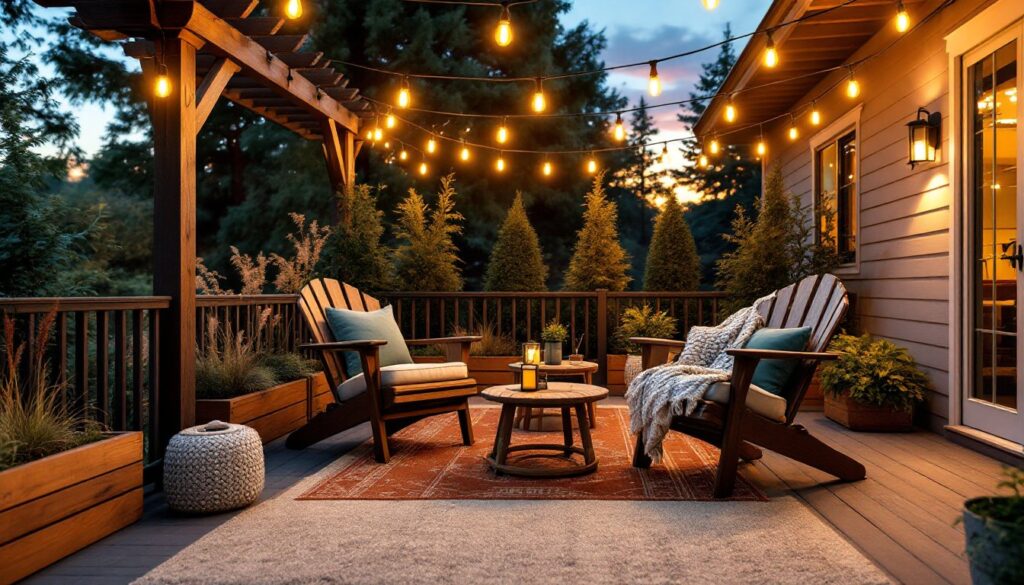
Comfort starts with how people sit. Skip the single lounge chair approach and think zones. Arrange furniture to face each other rather than all pointing the same direction, this encourages conversation and makes a small gathering feel intimate even when spread across the deck.
Lounge chairs and Adirondacks are classics for a reason, but they work best when paired with small side tables, a low coffee table, or even a bench. Group three or four chairs around a circular or low rectangular table, which takes up less visual space than a dining table while giving people somewhere to rest drinks, books, or elbows. Built-in benches along deck rails or corners are a smart structural play too: they anchor the space and make use of otherwise empty edges.
Consider the walking path through your deck. Arrange seating so people can move freely without shuffling between furniture. Leave at least 24 to 30 inches of walkway width. If your deck is deeper than 10 feet, two seating zones, one near the door, one at the far end, feel less crowded and give people options. Use furniture scale relative to the deck: a massive sectional on a small platform overwhelms the space and screams “I didn’t measure.”
Add Warmth With Strategic Lighting
Lighting transforms a deck from day-use-only to genuinely livable after sunset. The trick is layering: overhead fixtures for function, accent lights for mood, and ground-level markers for safety.
String lights (Edison-style bulbs or cafe lights) strung in a crisscross pattern or along the perimeter set the tone without harsh spotlighting. Hang them at about 7 to 8 feet above the deck surface for even spread and to avoid glare in eyes. Install on a dimmer if possible: your 9 p.m. gathering vibe is different from your 6 p.m. barbecue vibe. LED solar lights along riser steps or deck edges add safety and soft ambient glow, no wiring needed. For more dramatic effect, consider uplighting (small fixtures aimed upward at trees or pergola) or path lights that define edges without looking like a runway.
Avoid harsh overhead floods or downlights pointing straight down: they kill ambiance and cast harsh shadows. Warm color temperature (2700K to 3000K) feels cozier than cool white. If your deck is attached to the house, soffit-mounted fixtures can work, but be sure they’re on a separate circuit or dimmer from interior lights, you want control over the mood separately from indoor illumination.
Incorporate Soft Textiles and Furnishings
Textiles make a deck feel lived-in. Throw pillows on chairs, a rug underfoot, and blankets draped over armrests signal “relax here” to anyone who steps outside. The challenge is durability outdoors.
Choose outdoor-rated fabrics labeled solution-dyed or Sunbrella-type materials: they resist fading, mildew, and moisture better than indoor fabric. Cushions with removable, washable covers work for high-traffic decks. Outdoor rugs made from polypropylene or recycled plastic fibers handle foot traffic and won’t rot if water pools: keep them under cover during off-season to extend life. Throw pillows don’t have to be fancy, a mix of solids and simple patterns in warm, earthy tones (terracotta, sage, cream, charcoal) creates visual interest without clashing.
Blankets stored in a waterproof ottoman or deck box give guests something to wrap around on cool evenings, this small gesture hugely increases how late people linger. Layer textures: smooth cushions, woven pillows, chunky knit throws. Avoid heavily quilted or velvet-look fabrics: they trap moisture. Plan to bring cushions and pillows in before winter or during extended rain, or store them in a deck box under UV-protective covers. Many people also use cozy textiles to enhance outdoor living spaces for inspiration on what works in real decks.
Design Privacy With Plants and Screens
Privacy makes a deck feel like your own retreat, not a fishbowl for neighbors. Tall plants, living screens, and strategic shade structures are DIY-friendly ways to create boundaries without a full fence.
Tall planters with bamboo, ornamental grasses, or evergreen shrubs create a natural screen edge. Position them along sight lines, usually where you’ll sit, not necessarily the deck perimeter. Use large pots (20-30 inches tall) for visual weight and stability: smaller pots look scattered. If weight is a concern on upper-story decks, composite planters or resin pots are lighter than ceramic or wood. Living screens don’t just block views: they soften hard lines and add greenery without taking up much floor space.
Latticework panels or composite privacy screens can be bolted to deck rails or attached to posts: they’re less plant-intensive and work in shaded areas. Paint them to match your deck or trim for cohesion. Trellises work too if you’re willing to train climbing vines over two or three seasons. For faster results, arrange seating so the deck feels naturally separated from neighboring properties, facing inward rather than outward shifts the vibe from exposed to enclosed. Many homeowners discover beautiful deck designs that balance openness with privacy by studying how experienced designers handle sight lines.
Add Shelter With Pergolas and Shade Structures
Overhead shelter changes how usable a deck is. A pergola, shade sail, or retractable awning means the deck isn’t abandoned at noon or during light rain.
Pergolas create dappled shade and a defined “room” feel without blocking views entirely. Attached pergolas bolt to the house ledger: freestanding models sit on posts sunk into footings below the frost line (check local building codes, typically 36-48 inches deep in cold climates). Pergola kits are available, but confirm beam size, post dimensions, and fastening before buying. Wood pergolas need annual staining or sealing: composite materials are lower maintenance but pricier. Shade sails (tensioned fabric triangles or rectangles) are flexible, trendy, and can be installed by two people in a few hours. They don’t block wind the way a pergola does, so they’re good in warm climates.
Retractable awnings offer on-demand shade without permanent commitment: they roll up to open the deck to sun and sky. Motorized versions are convenient but add cost and complexity. Any overhead structure should be rated for wind load and snow load in your area, permitting is often required, especially for attached structures. Check your local building code before starting.
Benefits of Overhead Coverage
Overhead shelter extends your deck season. Even partial shade reduces heat and UV, making afternoons comfortable without a full enclosure. Rain canopies mean you can stay outside during light drizzle. Pergolas and shade sails add architectural interest that makes the deck feel intentional, not just an afterthought. They also protect cushions and furnishings from wear, lowering replacement costs over time. Combined with strategic backyard deck design featuring overhead structures, overhead elements make a cozy deck feel like a true outdoor living room.
Conclusion
A cozy deck is built in layers: solid seating, warm lighting, soft furnishings, privacy, and shelter. None of these require professional installation or major structural work on an existing deck. Start with one or two improvements, swap the lighting, add a rug and pillows, plant some tall grasses, and see how the space feels. Cozy isn’t about how big the deck is: it’s about inviting people to stay.