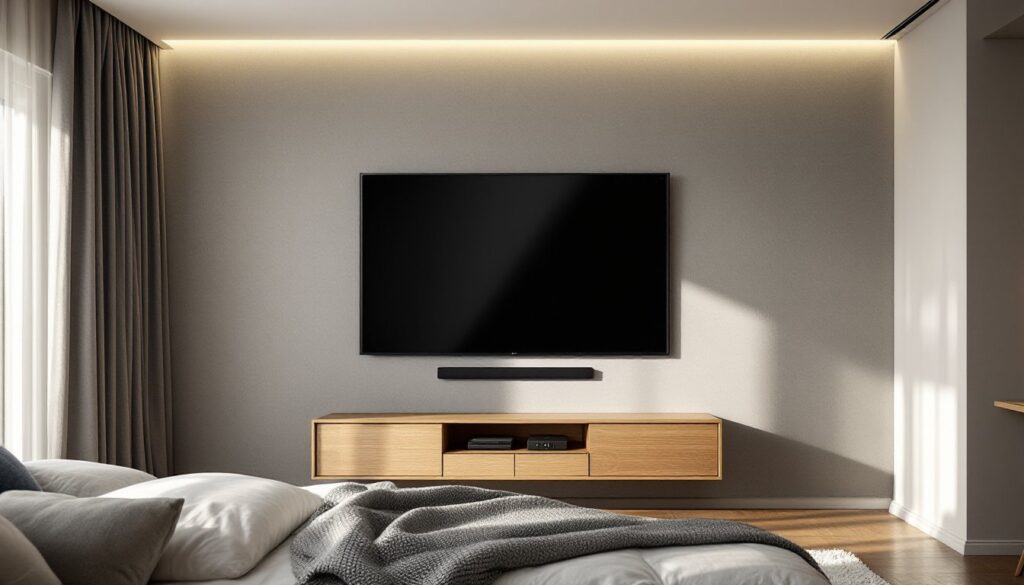
Getting a TV into a bedroom without it dominating the room is one of those projects that separates thoughtful design from eyesore territory. Whether you’re building a cozy retreat, adding entertainment to a guest room, or creating a home theater nook, the placement and integration of your bedroom TV set the tone for the entire space. The good news? There are now plenty of ways to make bedroom TV setups work with your décor instead of against it. This guide walks through nine practical approaches to installing, mounting, and styling a TV so it enhances your bedroom rather than cluttering it.
Table of Contents
ToggleKey Takeaways
- Wall-mounted TV setups require precise height placement (42–48 inches from the floor to screen center) to prevent neck strain and reduce glare when viewed from your bed.
- Bedroom TV ideas benefit from feature walls like shiplap or neutral paint colors (soft grays, warm whites) that frame the screen as intentional décor rather than a bare appliance.
- TV cabinets and entertainment units offer better visual integration than wall mounts alone, providing storage for media boxes and cables while allowing flexible repositioning without drywall damage.
- Motorized TV lift cabinets and sliding panel systems ($200–$3,000+) eliminate the TV visually when not in use, creating a serene bedroom atmosphere during daytime.
- Proper cable management using labeled Velcro ties, adhesive raceways, and hidden surge protectors separates professional installations from cluttered setups and prevents troubleshooting delays.
- Furniture arrangement and viewing distance matter as much as mounting: sit 1.5× to 2× the screen diagonal away from your TV to avoid neck strain and enjoy optimal picture detail.
Wall-Mounted TV Setup for Space and Style
Choosing the Right Wall Placement
Wall-mounting is the most space-efficient option and works best on a solid wall without plumbing, electrical wiring, or HVAC ducts running through it. Before you drill, grab a stud finder and locate the vertical studs, typically spaced 16 inches on center, that’ll anchor your mount securely. A TV weighing 40–80 pounds needs wall anchors or studs rated for that load: don’t skimp here.
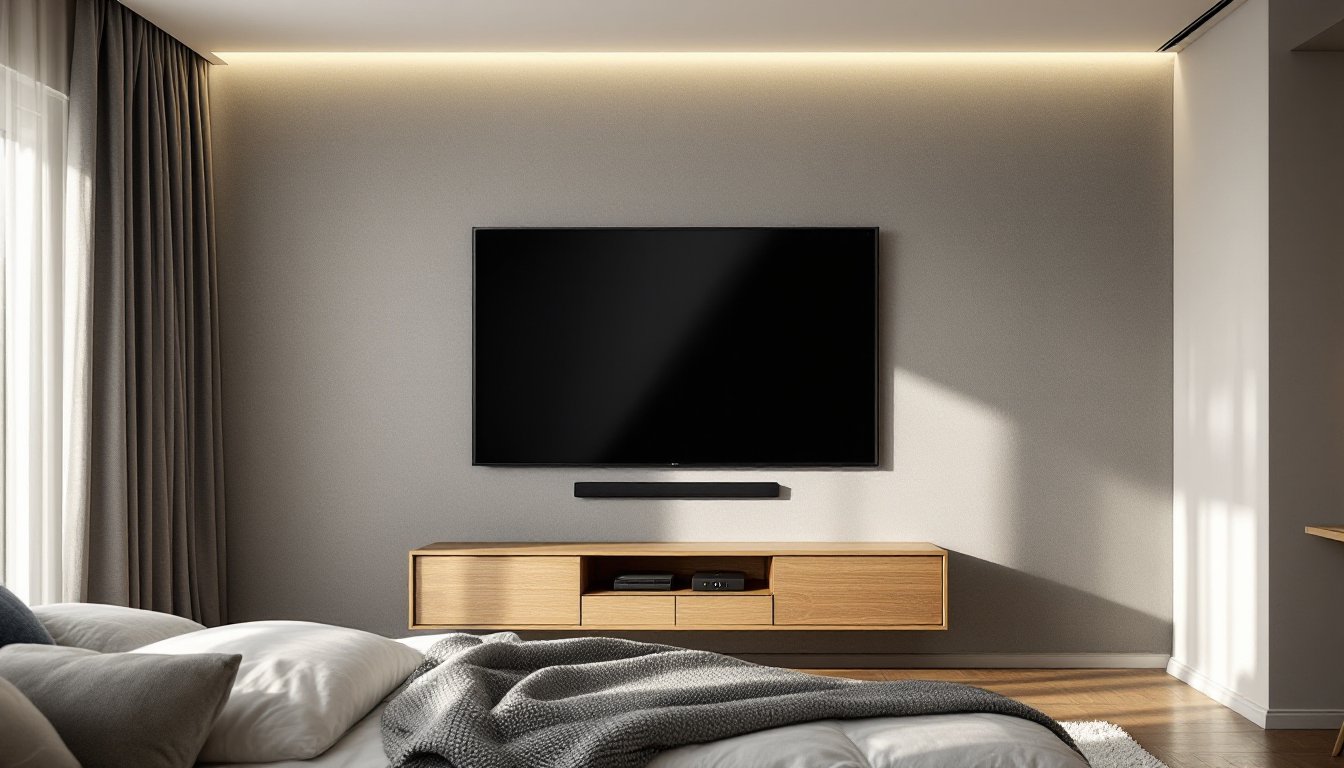
Height matters as much as location. When seated at eye level on your bed, the TV should sit roughly 42–48 inches from the floor to the center of the screen. Measure from your bed pillow, lean back into your typical viewing posture, and hold a phone at arm’s length to gauge where your eyes naturally rest. Mount too high and you’ll spend evenings craning your neck. Too low and reflections bounce off the screen.
Consider the wall behind your TV as part of the design. A feature wall, think shiplap, wallpaper, or a subtle paint color, frames the screen as intentional décor, not just an appliance bolted to drywall. Neutral tones (soft grays, warm whites, warm greiges) work best because they don’t compete with what’s on screen. Light colors also reflect less glare.
Choose a full-motion or tilting mount if multiple people watch from different spots in the room. Fixed mounts are cheaper and cleaner-looking, but they only work well if viewing angles are consistent. Full-motion mounts let you swivel and angle the screen, though they stick out further from the wall and require careful cable management to avoid a tangled mess behind your TV.
TV Cabinet and Entertainment Unit Solutions
A TV cabinet or entertainment unit gives you storage, a polished look, and the flexibility to move the setup later without patching drywall. For bedrooms, low-profile cabinets (30–36 inches tall, roughly the width of your TV) work better than floor-to-ceiling units, which make small rooms feel boxed in.
Wood cabinetry, whether ready-to-assemble from big-box stores, vintage finds from thrift shops, or custom-built pieces, adds warmth and anchor a bedroom visually. Floating shelves flanking a TV are trendy but require serious wall reinforcement: a sagging shelf kills the effect and risks damage. If you go that route, locate studs and use heavy-duty toggle bolts rated for at least 50 pounds per shelf.
When selecting materials, match your existing bedroom furniture or the overall aesthetic. A sleek lacquered cabinet suits modern minimalist rooms: warm oak or walnut works for traditional or rustic spaces. Painted cabinets (matte black, soft white, or subtle jewel tones) adapt to nearly any style. The beauty of a cabinet is that you hide media boxes, cables, and clutter inside, just ensure ventilation holes or gaps to prevent heat buildup around the TV.
Cable access from the back or through the unit is essential. Drill or cut a hole for cables to pass through, or use adhesive-backed cable raceways to guide wires neatly. A cabinet also lets you incorporate accent lighting on shelves above or below, which softens the glow of the TV and creates ambiance.
Concealing Your TV With Hidden and Sliding Options
If you want to eliminate the TV visually when not in use, a motorized TV lift cabinet or sliding panel system retracts the screen into a storage unit, behind a mirror, or up into a ceiling mount. These are premium solutions, expect $800–$3,000+, but they’re transformative for bedrooms where you want a serene, clutter-free look during the day.
Motorized TV lift cabinets work like filing drawers in reverse: the TV rises from a cabinet when you press a remote, then lowers back inside when you’re done. Brands like Touchstone or Motorized TV Mounts offer reliable systems. Installation requires a sturdy base cabinet, electrical outlet access, and a clear path for the TV to rise and fall, usually 4 feet above the cabinet top at minimum.
A sliding panel mounted in front of a wall-mounted TV hides it behind artwork, a sliding barn door (popular in farmhouse and rustic rooms), or a fabric panel on a track system. This approach is cheaper than motorized lifts ($200–$600) but requires more manual interaction. Barn doors add character, though they do need smooth-gliding hardware and regular maintenance to prevent sticking.
Another creative option: mounting the TV on a wall where a sliding mirror or picture frame slides across it when not in use. This works best in smaller bedrooms where you want maximum visual calm. Ensure the sliding mechanism operates smoothly and the covering material isn’t too heavy to strain the track system over time.
Accent Lighting and Cable Management Essentials
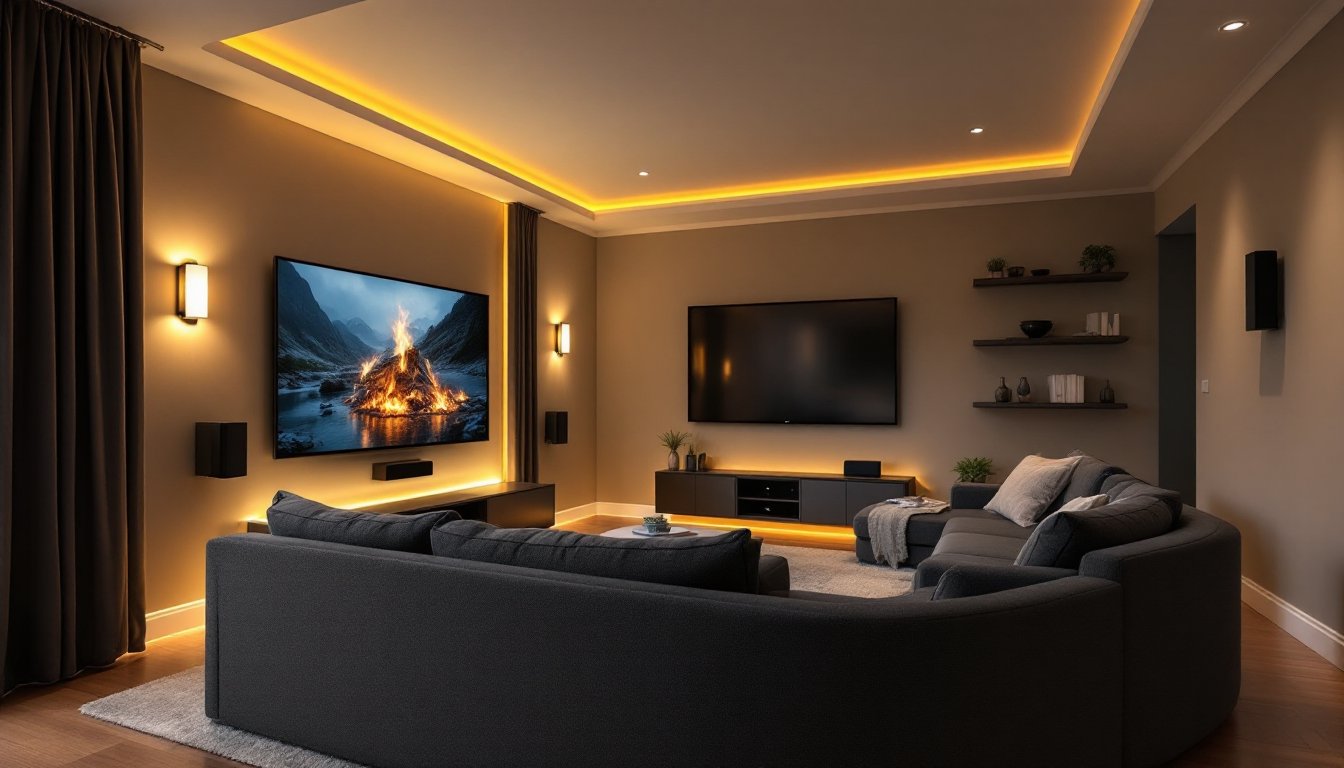
Accent lighting behind or around your TV softens the glare, reduces eye strain during evening viewing, and adds a hotel-like sophistication to your bedroom. LED strip lights, typically 5630 or 2835 SMD chips on adhesive-backed strips, cost $15–$40 and stick directly to the wall behind the TV. Warm white (2700K–3000K) tones work best in bedrooms: avoid harsh cool white. These strips pair with a simple remote dimmer so you can adjust brightness without getting up.
Place LED strips about 4 inches behind the TV (or along the perimeter of your wall mount) to cast ambient light onto the wall surface. This indirect lighting frames the screen without creating a distracting halo on the display itself. If your mount includes a backplate, the strips tuck behind it nicely.
Cable management separates a professional-looking installation from a rats’ nest of wires. Bundle cables with Velcro ties or cable clips rated for the combined weight of your wires, don’t just use tape, which fails over time. Route cables through the wall (using a fish tape and a horizontal outlet box at the TV level) if the wall is accessible, or use adhesive-backed cable raceways that run down the wall and blend with paint or can be painted over.
Label your cables at both ends before connecting them: a simple P-touch labeler or masking tape saves hours of troubleshooting later. Hide a small surge protector strip behind your cabinet or mount so multiple devices (streaming box, sound bar, gaming console) plug into one outlet. Ensure the outlet is accessible, never trap a surge protector behind furniture. Check local electrical code if running new outlets: many jurisdictions require a licensed electrician for bedroom outlet installation.
Furniture Arrangement for Optimal Viewing Comfort
Bedroom TV setups succeed or fail based on where you sit and how the room flows. Before mounting anything, arrange furniture in the layout you’ll actually use. The viewing distance, how far back your bed (or seating) sits from the TV, affects screen size and mount height. A general rule: sit at a distance of 1.5× the screen diagonal for 4K content, or 2× for standard HD. A 55-inch TV, for example, works best at 6–7 feet away: cramming it into a room where you sit 3 feet away causes neck strain and forces you to miss detail.
If your bedroom is a dual-purpose space (sleeping + office, for example), angle the TV so it’s viewable from your bed but doesn’t dominate the room when you’re working at a desk. A swivel or articulating mount lets you rotate the screen toward the bed at night and away during the day.
Lighting in the rest of the room affects glare. Avoid placing a TV opposite a bright window: position it perpendicular to windows when possible. Blackout curtains or light-filtering shades (which let you adjust natural light) help you watch TV during the day without glare washing out the picture. Modern design sources like Domino emphasize balancing entertainment zones with natural light and functional furniture groupings, keeping the bedroom primarily a rest space rather than a media hub.
Consider soundbar placement too. A small soundbar under the TV (mounted on a bracket or sitting on a media console) keeps audio aligned with the picture. If the TV sits high on a wall, a properly positioned soundbar at ear level when you’re lying down improves dialogue clarity without needing bulky surround speakers in a bedroom.
Conclusion
Bedroom TV ideas span from minimalist wall mounts to motorized concealment systems, but they all share a common goal: integrate entertainment without sacrificing comfort and style. Whether you choose a sleek wall-mounted setup, a cabinet-based solution, or a hidden system depends on your budget, available wall space, and how much visual prominence you want the TV to have. Start with accurate measurements, solid wall anchors, and thoughtful cable management, those fundamentals prevent costly mistakes and keep your setup looking sharp for years. The result is a bedroom where the TV enhances relaxation instead of dominating the room.