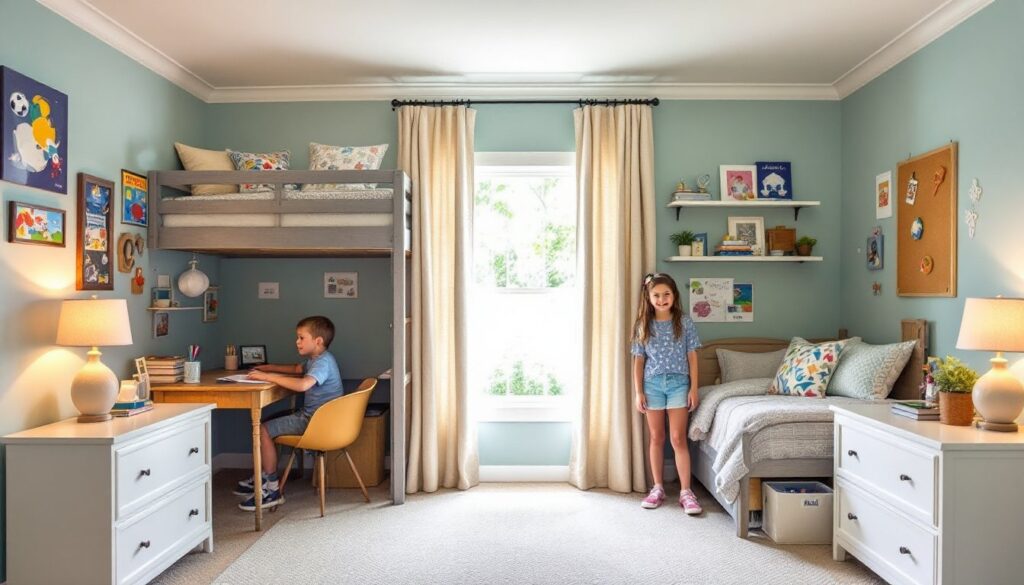
Sharing a bedroom as a boy and girl presents a design challenge that goes beyond picking matching bedding. Both kids need their own space to feel comfortable, yet they’re living in the same room, a paradox that requires thoughtful planning and practical solutions. The goal is creating a bedroom that respects each child’s privacy and personality while staying functional and age-appropriate. With the right furniture arrangement, visual dividers, and storage strategies, a shared bedroom can work beautifully and even become a project the whole family enjoys building together.
Table of Contents
ToggleKey Takeaways
- Create distinct zones for each child using visual dividers like curtain rods, screens, or bookshelves to establish privacy and reduce conflict in a shared bedroom.
- Strategic furniture arrangement—such as loft beds, L-shaped layouts, or twin beds on opposite walls—maximizes space while respecting each child’s separate territory.
- Implement a split-paint scheme where each half of the room reflects one child’s color preference while using shared neutral trim to maintain visual cohesion.
- Dedicated storage solutions like labeled dressers, wall-mounted shelving, and under-bed bins prevent belongings from mixing and are essential to a functional shared bedroom.
- Involve both children in design decisions early and conduct monthly 15-minute item audits to maintain fairness and prevent slow creep of clutter into each zone.
- Affordable room dividers like fabric screens ($60–$150) and tension rods ($30–$50) offer flexible, non-permanent ways to create separation without major construction.
Creating Separate Zones for Privacy and Personalization
The foundation of a successful shared bedroom is dividing the space into distinct zones, one for each child. This doesn’t mean building walls: it means creating visual and psychological separation. Start by identifying the room’s natural layout: windows, closets, doors, and architectural features all influence where zones work best. Ideally, each child gets a side of the room with a bed, some floor space, and access to natural light or a light fixture they can control independently.
This zoning strategy works because it gives each child a territory they can personalize. Rather than compromising on everything, they each get autonomy over their own area, colors, posters, storage, lighting, while sharing the neutral common space in the middle or along one wall. It also reduces conflict: one child’s mess stays contained, and privacy needs are respected more easily.
Room Dividers and Curtain Solutions
A room divider is the quickest, non-permanent way to create separation. Accordion-style fabric dividers (often called screens) are affordable, come in various widths, and require zero installation. They fold away during the day if the kids prefer more openness, then close at night. Expect to spend $60–$150 for a decent one. Avoid the cheapest versions: hinges wear out and fabric tears easily with daily use.
Curtain rods and fabric offer a more flexible alternative. A floor-to-ceiling tension rod ($30–$50) with a heavy linen or blackout fabric panel creates a soft visual boundary and actually muffles some sound between zones. This works especially well in longer, narrower rooms where you can divide down the middle. The upside is flexibility: open the curtain during assignments time, close it when they want privacy. Install the rod before the children decorate so they can add their own personal touches on each side.
For a permanent partition without drywall, consider a half-wall or room divider furniture piece, tall bookshelves, storage cubes, or built-in cabinets do double duty by storing items and blocking sight lines. This approach works if the room is large enough and you’re building something that stays put.
Furniture Arrangements That Work for Two
The bed layout makes or breaks a shared bedroom. The three main strategies are:
Twin beds on opposite walls: This spreads kids out and works well in rectangular rooms. Each child gets their own corner, and the arrangement clearly signals separate zones. The downside is it consumes a lot of floor space, leaving less room for play or a desk area.
Loft bed with desk underneath, plus a separate twin bed: If space is tight, a loft bed (6–7 feet tall) gives one child a sleeping platform and frees up the floor for a desk, seating, or storage below. The other child gets a standard twin bed on the opposite wall or under a lower loft. Loft beds are sturdy and relatively affordable ($200–$400), but measure your ceiling clearance and confirm that assembly doesn’t require more tools than you have. Kids under 6 shouldn’t be on high lofts without railings and your constant supervision.
L-shaped or perpendicular arrangement: Position one bed along the head wall and the other along a side wall, creating an L. This uses corners efficiently and naturally defines two zones without needing extra dividers. Ensure there’s still a walking path and enough open floor for activities.
Whatever layout you choose, keep walking paths clear (at least 2 feet wide) and ensure both children can reach their beds and a light switch or lamp independently. Tight, cluttered rooms breed conflict. As you arrange, consider the room’s traffic flow: where does the door open, where does sunlight come in, and where do kids naturally congregate? Furniture should support these patterns, not fight them.
Color Schemes and Decor That Appeal to Both
Painting the entire room in one color just to satisfy “neutral” expectations often fails because it feels like nobody owns it. A better approach uses a split-paint scheme where each half gets a color the child loves, with a shared accent wall or trim color to tie things together.
For example, paint one side of the room a soft blue and the other a warm sage green, then give both sides white or cream-colored trim and ceiling. This keeps the room from feeling chaotic while letting each child’s personality show. The shared trim color ($20–$30 per gallon, typically one gallon covers 350–400 sq. ft.) acts as a visual connector.
If your kids are torn between colors, consider a two-tone wall where you paint horizontal stripes or a diagonal split using painter’s tape. This requires careful taping (an extra 30 minutes of prep) and quality painter’s tape ($6–$10 per roll) to avoid paint bleeding, but it’s a clever compromise that feels intentional rather than like a rushed decision.
Decor beyond paint should follow the same zone approach. Each child picks posters, bulletin boards, and shelving for their side: the shared space gets neutral or eclectic pieces. Resources like Homedit showcase room ideas that balance personal style with cohesion. A few tips: limit large posters to each child’s zone to avoid visual overload, use matching lamp styles on both sides for consistency, and pick bedding that complements (not matches) the wall colors. Mismatched bedding looks intentional if you choose colors from the same palette, both blues and greens, for instance, or both warm earth tones.
Storage Solutions for Managing Two Kids’ Belongings
Storage is where most shared bedrooms fail. Without intentional systems, one child’s stuff migrates into the other’s space and resentment builds. Each child needs clearly labeled, dedicated storage: ideally a dresser or shelving unit on their side of the room, plus shared storage for off-season items or shared toys.
Dressers should be spaced apart or positioned back-to-back to reinforce zone boundaries. A standard five-drawer dresser ($150–$300) holds about 2–3 weeks of clothing for one child. Avoid deep drawers: they encourage dumping and make finding items hard. Label the inside of drawers with category stickers (“socks,” “shirts,” “underwear”) so kids know what goes where, this alone cuts clutter arguments in half.
Wall-mounted shelving saves floor space and draws eyes upward in smaller rooms. Install shelves at child height (around 3–4 feet up) so they can access their own things and (importantly) return items without asking for help. A pair of simple wall shelves with brackets runs $60–$120 per side, plus installation time.
Closet Organization and Under-Bed Storage
The closet is prime real estate. Rather than one rod, divide it vertically: install a second rod at child height (around 4 feet high) on one half and keep the other half with an adult-height rod for longer items or shared storage. A double closet rod kit costs $20–$40 and installs in 30 minutes with a drill and level.
Label each child’s hanging section clearly. Use slim velvet or plastic hangers (not wire) to save space, they’ll fit about 20% more clothing. Add a low shelf or bin below each section for shoes, folded items, or toys.
Under-bed storage is nearly free real estate. Low-profile plastic bins with wheels ($20–$40 for a set) slide under each bed and hold off-season clothing, extra bedding, or bulky toys. Label the bins clearly and rotate contents seasonally. This keeps the visible room uncluttered while storing things they actually use.
Shared storage, for art supplies, sports gear, or toys both kids use, should go in a labeled cabinet or closet shelf, not on the bedroom floor. Resources like Young House Love often feature DIY storage hacks that transform awkward spaces without expensive built-ins.
Pro tip: Once a month, do a 15-minute “item audit” where each child reviews their stuff and returns misplaced items to the right zone. This prevents slow creep and keeps resentment low. Make it part of their responsibility, not a chore you impose.
Conclusion
A shared bedroom works when both children feel they have their own space, even within a shared room. Thoughtful zoning, simple dividers, strategic furniture placement, and dedicated storage create that separation without requiring major construction or expense. The investment in planning upfront, measuring twice, involving both kids in design decisions, and being honest about what each child needs, pays off in a room that feels fair and functional. Start with one or two changes (a room divider, a fresh coat of paint) and adjust as you learn what works. With these practical strategies, a shared bedroom becomes an asset, not a battleground.