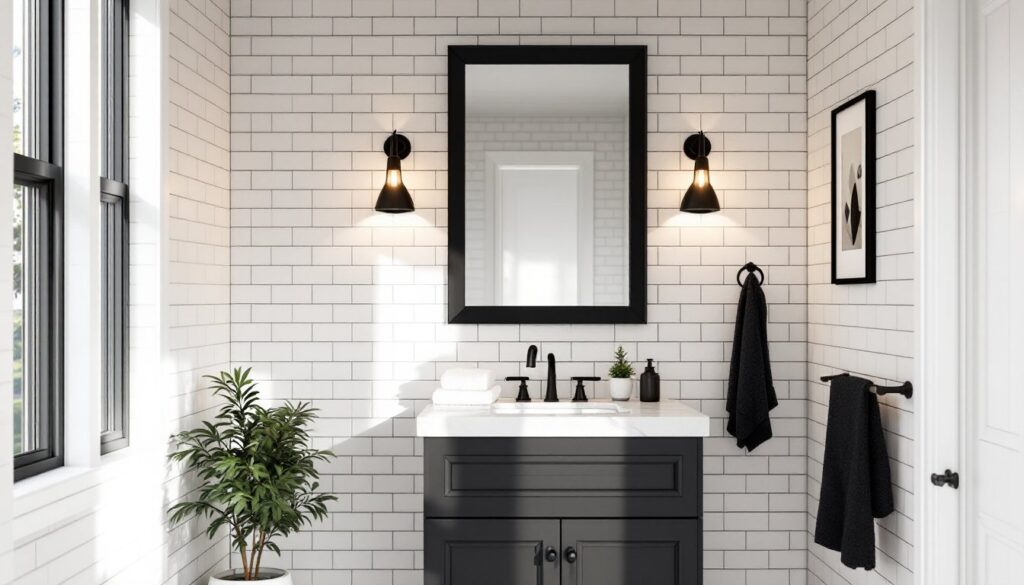
Small bathrooms pose a real design challenge, but they’re also a chance to get bold without overwhelming the space. Black and white has become the go-to palette for homeowners who want visual impact without making walls feel cramped. This classic pairing works because it creates contrast and definition, tricking the eye into perceiving more depth than actually exists. Whether you’re planning a full remodel or a targeted refresh, understanding how to balance these two powerful colors will transform even the tiniest bathroom into a polished, intentional space. Here are practical black and white small bathroom ideas, and the reasoning behind each, to help you pick the right approach for your home.
Table of Contents
ToggleKey Takeaways
- Black and white small bathroom ideas leverage high contrast to create visual depth and the illusion of spaciousness, making them ideal for cramped layouts.
- Choose a dominant color—white for brightness and openness or black for drama—keeping the secondary color to 15–20% of visible surfaces to avoid an oppressive feel.
- Subway tiles with contrasting grout, geometric patterns, and large-format flooring add personality and visual rhythm without overwhelming a small space.
- Coordinate fixture finishes (matte black, brushed nickel, or polished chrome) across faucets, mirrors, and hardware to reinforce an intentional, polished design.
- Install bright, evenly distributed LED lighting (3000K–4000K) with vanity sconces to prevent shadows and ensure the monochrome palette remains visually defined.
- Keep decor and accessories minimal; every object should serve a purpose to maintain the clean, ordered aesthetic that makes small bathrooms feel larger.
Why Black and White Works for Small Bathrooms
Black and white creates visual rhythm in a confined space. Unlike muddy neutrals or multiple colors that can feel chaotic, a two-tone scheme reads as intentional and clean, qualities that naturally feel spacious and orderly.
The contrast between black and white also draws the eye to architectural details and fixtures, which becomes your design advantage. A white subway tile wall with black grout, for instance, emphasizes the grid pattern and adds visual interest without introducing a third color. Small bathrooms benefit from this clarity because every element has a defined purpose.
Beyond aesthetics, this palette is forgiving. Water marks, soap residue, and dust are less visible on both black and white surfaces compared to gray or beige. From a practical maintenance standpoint, your small bathroom will look cleaner longer, a real win when you’re working with limited footage.
Color Balance: Choosing Your Dominant Shade
The key to avoiding a stark or oppressive feel is deciding whether white or black leads your design. Your choice determines how the space feels and functions.
White-Dominant Layouts for Brightness and Openness
If your bathroom is cramped or has limited natural light, white should dominate. Cover walls, ceiling, and vanity in bright white or soft white to maximize perceived space. This is where subway tile, beadboard, or flat-panel cabinetry in white or near-white shades work beautifully.
Black enters as accent trim, hardware, or a single feature wall. A black tile border running horizontally or vertically, black grout lines, matte black faucets, and a black-framed mirror are perfect restraint-based additions. You get visual pop without sacrificing the airy, open feeling that white provides. One rule: if you’re going white-dominant, commit to it on large surfaces (walls, flooring, vanity). Black accents should account for no more than 15–20% of the visible area.
Black Accents for Depth and Contrast
Conversely, if your bathroom has ample light or slightly larger dimensions, a black-dominant scheme with white relief creates drama and sophistication. Black tile, painted walls, or black cabinetry form the base, while white countertops, white tile, or white accessories provide breathing room and prevent the space from feeling like a cave.
Designers often pair black walls with a white tile floor featuring a black border or insert pattern. The eye travels downward and sees white, which anchors the space. Alternatively, black-and-white patterned tile can dominate the floor while walls stay neutral (black or dark gray), and fixtures remain polished chrome or matte black.
Balancing black and white is about surface area. If black covers more than 40% of your visible surfaces, you need enough white trim, fixtures, or flooring to prevent the room from feeling tomb-like. Test paint samples on a large area and observe them at different times of day before committing.
Tile Patterns and Flooring Solutions
Tile is your biggest opportunity to embed pattern and style in a black-and-white bathroom. Small spaces benefit from pattern because it draws the eye and adds personality without clutter.
Subway tile remains the workhorse for small bathrooms. A 3″ × 6″ or 2″ × 4″ white subway tile with black grout lines creates instant definition and visual rhythm. The grout lines act as invisible structure, making walls feel more organized. If you reverse it, black subway tile with white or light grout, the effect is more dramatic but equally effective if walls are kept mostly white.
Hexagon or penny-round tiles in alternating black and white create a classic checkerboard or mosaic look. These smaller tiles work well on feature walls, around the shower surround, or as a floor pattern. The trick is restraint: if the entire bathroom is patterned tile, the space feels busy. Instead, run a patterned tile accent on the shower wall or as a 12-18 inch border, leaving surrounding walls or flooring solid.
Moroccan or geometric patterns, stars, diamonds, or intricate tessellations in black on white or vice versa, add character if kept to a single zone. A geometric tile floor, for instance, becomes an anchor: keep walls and the shower surround simple.
For flooring specifically, large-format tiles (12″ × 24″ or bigger) make small bathrooms feel larger because there are fewer grout lines to interrupt the eye. A subtle black-and-white checkered pattern or a solid tile with contrasting grout works well. If you’re not tiling, vinyl plank flooring that mimics black-and-white tile or marble is budget-friendly and waterproof. Ensure any flooring has slip resistance (look for matte finishes or textured surfaces) since bathrooms are wet environments.
Whoever executes the tilework should waterproof behind walls (use cement board as backing and a waterproofing membrane) and ensure proper slope on shower floors for drainage. This isn’t a cosmetic step, inadequate waterproofing leads to mold and structural damage. If you’re not experienced with tile layout and waterproofing, hire a licensed tile contractor.
Fixtures, Hardware, and Functional Decor
Fixtures and hardware are the jewelry of your bathroom. In a black-and-white scheme, they’re even more critical because they’re high-contrast focal points.
Faucets and showerheads in matte black, brushed nickel, or polished chrome complement both color palettes. Matte black (sometimes called “oil-rubbed bronze”) reads warmer and more modern: brushed nickel feels clean and contemporary: polished chrome works with either aesthetic. Whatever finish you choose, commit to it across faucet, towel bar, and shower trim, a mismatch reads as accidental rather than intentional.
Mirrors are functional and decorative. A black-framed mirror or one with a black border instantly grounds the space and prevents all-white vanities from feeling sterile. Conversely, a large white-framed mirror brightens a black-dominant bathroom. Frame size matters: in a small room, an oversized mirror (36″ wide or larger) stretches the perceived space.
Vanity cabinets set the tone. A white vanity with a black countertop and matte black hardware reads balanced and modern. A black vanity with white marble or quartz countertop is more luxe-feeling. Either way, the vanity typically occupies significant visual real estate, so choose the color that aligns with your dominant palette.
Towel bars, hooks, and shelving should reinforce your color story. If black and white are your themes, avoid chrome or gold, stick with the finish family you’ve chosen for faucets. Small bathrooms don’t have room for competing metals.
For decor, keep it minimal. A single black-and-white artwork, a small potted plant with white pot, or a neatly rolled stack of white towels with one black towel on top adds personality without clutter. Avoid overstuffing shelves or hanging multiple unrelated items. Every object in a small bathroom should earn its place.
Lighting Strategies for Small Monochrome Bathrooms
Lighting is non-negotiable in black-and-white bathrooms because contrast requires visibility to work.
If your bathroom has a small window or no natural light, install bright, high-CRI (color-rendering index) LED lighting over the vanity and as overhead ambient light. A recessed light or two above the toilet and shower ensures no dark corners where mold might hide and where the monochrome palette loses its definition. Look for 3000K to 4000K color temperature, warm enough to feel inviting, cool enough to complement black and white without yellow or blue cast.
Vanity lighting should flank or surround the mirror, not sit above it alone. Side-mounted sconces provide flattering, even light that shows true colors and prevents shadows (important when applying makeup or grooming). If the space is truly tiny and wall space is limited, a single, high-quality LED bar light mounted directly above the mirror works.
Ambient overhead lighting can be a simple flush-mount or, better yet, a small chandelier or pendant if ceiling height allows. In 8-foot ceilings (standard in most homes), keep pendants compact and ensure they clear the shower surround if located there.
Consider dimmable bulbs if your electrical setup allows. Dimming softens the contrast in black-and-white bathrooms during evening routines, reducing glare and creating a more spa-like feel. This also saves energy and extends bulb life.
Avoid mixing color temperatures. If your vanity lights are 3000K, your ceiling fixture should match, hodgepodge lighting undermines the intentional, polished look you’re building. Test before installing: bring bulbs and fixtures to see how they interact with your chosen tile and paint colors.