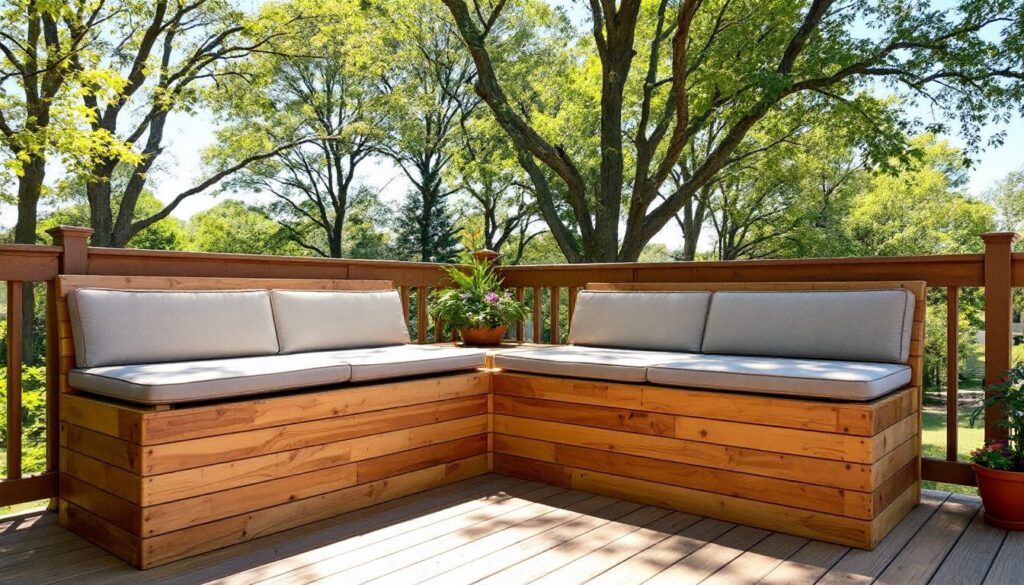
Outdoor seating that combines form and function can transform a neglected deck into the neighborhood gathering spot. Whether you’re working with a cramped corner or a sprawling platform, deck benches offer flexible, practical solutions that don’t require major construction. The right bench design fits your space, matches your style, and holds up to sun, rain, and countless backyard gatherings. This guide walks through seven proven deck bench ideas, from built-in corner designs to storage-savvy builds, so you can find the perfect fit for your home.
Table of Contents
ToggleKey Takeaways
- Built-in corner deck benches maximize tight spaces and create custom seating without requiring major construction, using pressure-treated 2×10 joists anchored to existing deck posts.
- Storage benches solve common deck problems by keeping cushions, tools, and pool toys dry and organized while providing additional seating in a single footprint.
- Choose exterior-grade finishes like semi-transparent urethane or alkyd-based stain to protect wood from UV damage and extend the lifespan of your deck bench to 5–10 years.
- Proper drainage is essential for all deck bench ideas—space seat boards ¼ to ½ inch apart and drill ventilation holes to prevent moisture traps and rot.
- Backrest angles of 10–15 degrees from vertical combined with Sunbrella or marine-grade cushions transform a utilitarian bench into genuinely comfortable outdoor seating.
- Container garden benches merge seating with landscaping to create focal points, though they require daily watering during peak season to maintain healthy plants.
Built-In Corner Bench Seating
A built-in corner bench maximizes tight spaces and creates a custom look without taking up floor area. Anchoring benches to the deck structure requires basic carpentry: a frame made from pressure-treated 2×10 joists, secured to existing deck posts or lag bolts driven into rim joists. Typical corner benches sit 16–18 inches high, with a depth of 16–20 inches, deep enough for comfortable seating but not so deep it blocks sightlines.
Built-in benches demand proper surface prep. Check that the deck framing is sound: any soft, spongey wood signals rot that must be cut out and reinforced. Measure twice, cut once, mark post locations with chalk or a pencil before drilling pilot holes. Use corrosion-resistant fasteners like galvanized or stainless-steel lag bolts: regular bolts rust and weaken the joint, especially in coastal areas.
The seat frame itself can use 2×6 or 2×8 lumber for the top. Space boards ¼ to ½ inch apart to allow water drainage. Sand all surfaces with 80- to 120-grit paper before finishing. A quality exterior stain or sealant (like semi-transparent urethane or alkyd-based stain) protects against UV damage and extends the wood’s life to 5–10 years before refinishing.
Corner benches work best in low-traffic areas or where you want to define a gathering zone. Install one along a railing for a protected seating nook, or anchor it perpendicular to the house for a bench that frames a view.
Custom Storage Benches for Deck Living
Storage benches solve the perennial deck problem: where do you keep cushions, tools, and pool toys? A deck-mounted storage bench uses the same framing as a basic bench but includes a hinged plywood box underneath. This keeps items dry and out of sight while adding valuable seating.
Construction starts with a pressure-treated frame (2×6 or 2×8 joists) sitting on concrete pads or deck blocks for elevation and airflow. The storage box itself uses ¾-inch exterior-grade plywood, reinforced at corners with 2×4 cleats. Hinge the lid with stainless-steel butt hinges or piano hinges rated for outdoor use. Ensure the lid has a support prop or friction hinge so it won’t slam shut, a pinched finger on deck day isn’t the vibe.
Ventilation matters. Drill ½-inch drainage holes in the bottom of the plywood box, and leave a 1-inch gap at the top to prevent moisture traps. Line the interior with cedar shavings or a moisture-absorbing mat to manage humidity and odor.
Finish complexity varies. Paint or stain the exterior to match your deck, but leave the interior raw plywood to breathe. If you want a polished look, outdoor storage benches can be sleek, integrated designs that blend seamlessly with deck aesthetics. Typical storage benches measure 4–6 feet long, 18 inches deep, and 16–20 inches high, roomy enough for season-long storage without overwhelming a standard deck.
Rustic Wooden Benches
Rustic benches bring warmth and character, especially when built from reclaimed or locally milled lumber. Cedar, redwood, and composite materials resist rot naturally, though they still need regular sealing. A simple rustic design uses a single 2×12 plank for the seat, supported on angled legs cut from 4×4 timber. The angle, typically 15–20 degrees, leans the back slightly, improving comfort without complex joinery.
Modern Minimalist Designs
Minimalist benches strip away decorative elements and focus on clean lines and durability. Think flat-pack aesthetic: a solid seat in light wood or composite material, minimal visible fasteners, and an open-frame design that sheds water quickly. A minimalist bench might use aluminum or steel legs paired with FSC-certified hardwood or composite decking material.
These designs appeal to modern deck aesthetics and require fewer joints, which means fewer places for water to hide and rot to start. A frameless design, where the seat is supported by posts at each end, with no visible bracing, reads as ultra-contemporary. Composite benches ($300–600) offer low maintenance compared to wood ($150–300 unfinished), though they’re pricier upfront.
Build rustic benches from plans found at Fix This Build That, which offers detailed woodworking tutorials. Keep in mind: rustic designs often look better with distressing or weathering, so don’t over-sand or over-finish. Let the wood age naturally if you want authentic patina.
Backrest and Cushion Options
A backrest transforms a bench from utilitarian to genuinely comfortable seating. Angle the backrest 10–15 degrees from vertical: anything steeper feels like lounging, not sitting. Construct backrests from 2×4 or 2×6 lumber, mortised or bolted to the bench seat frame. Vertical slats spaced 2–3 inches apart provide ventilation and shed water better than a solid panel.
Cushions add comfort and color but demand seasonal care. Outdoor cushion covers should use solution-dyed acrylic (Sunbrella is the industry standard) or marine-grade polyester, both rated for UV and moisture resistance. Stack cushions no more than 4 inches thick to avoid moisture traps between layers. Store cushions in a sealed container or bring them indoors during winter in cold climates.
Alternatively, skip removable cushions and upholster the backrest with outdoor-rated fabric stretched over dense closed-cell foam. This approach looks custom and eliminates loose cushions blowing away. Stitch the fabric using exterior-grade polyester thread and secure it underneath with stainless-steel staples. The Handyman’s Daughter offers tutorials on upholstering outdoor furniture, which is a manageable DIY project if you have a staple gun and patience.
For benches without backrests, consider adding a simple pillow or two for lower-back support. Lumbar cushions (12×20 inches) mount easily with Velcro straps and make bench sitting less fatiguing during long outdoor meals.
Container Garden Benches
Container garden benches blend seating with planting, turning a bench into a living landscape feature. The design pairs a solid bench seat with large planters built into or mounted below. A 2×12 or 2×10 seat sits atop a frame that incorporates 12–18 inch-tall planter boxes on either side. Fill boxes with drainage-friendly potting mix, then plant cascading flowers, trailing ivy, or seasonal vegetables.
Construction requires sturdy framing: pressure-treated 2×6 cleats running the bench length, with ¾-inch pressure-treated plywood forming the planter walls. Drill drainage holes in the plywood floor, and line the interior with landscape fabric to prevent soil from washing into gaps. Use exterior-grade wood stain or paint to protect plywood from UV and moisture.
Watering is the maintenance bottleneck. Planters dry faster than in-ground beds, especially in hot summers, so plan for daily watering during peak season. Add a 2–3 inch layer of mulch on top of soil to slow evaporation. Choose plants suited to your climate zone and sun exposure, full sun benches tolerate different plants than shaded corners.
These benches work best as focal points near patios or walkways. A 6-foot container bench with two 18-inch-wide planters costs $400–800 in materials if built from scratch, or $600–1200 if purchased pre-made. The payoff: seating, color, and softened hardscape all in one footprint.
Conclusion
The best deck bench is one you’ll actually use and maintain. Start with an honest assessment of your space, climate, and comfort priorities. Built-in benches maximize small areas: storage benches solve clutter: rustic designs add character: and container benches merge form and function. Whichever style you choose, prioritize solid framing, proper drainage, and exterior-grade finishes. Sand, seal, and sit, your backyard will thank you.