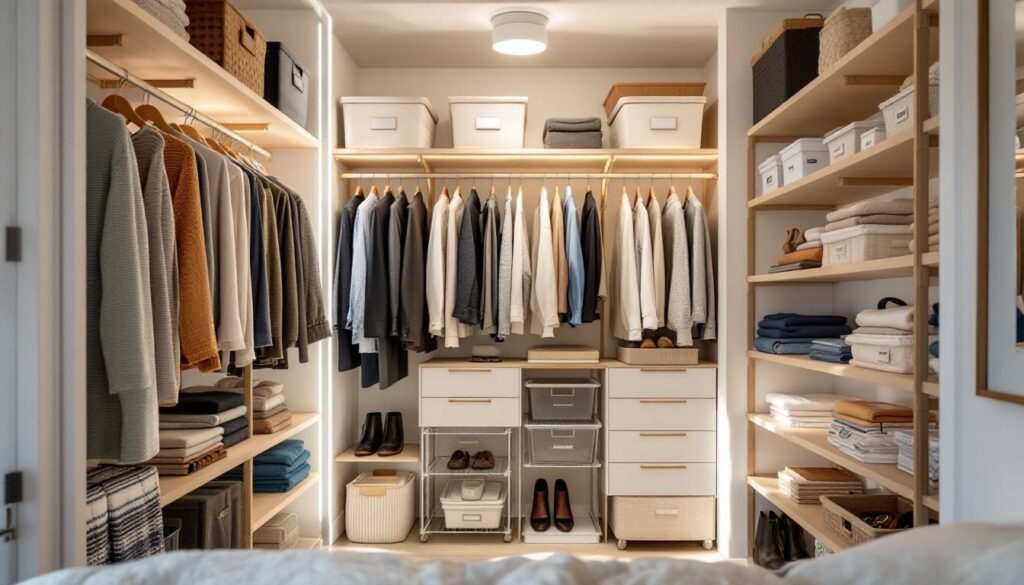
A small bedroom closet doesn’t have to mean cramped storage and clothes piling on the floor. Whether you’re working with a reach-in closet the size of a shoebox or a bedroom that barely fits a dresser, smarter organization and strategic additions can transform even the tightest space into functional storage that actually works. The key isn’t necessarily buying a bigger closet, it’s using what you have more efficiently. This guide walks you through seven proven ideas to maximize your small bedroom closet, from vertical solutions to smart containers, so you can reclaim your bedroom and keep clothes accessible, not hidden.
Table of Contents
ToggleKey Takeaways
- Maximize small bedroom closet space by installing wall-mounted shelving and double hanging rods, which can nearly double your storage capacity without taking up floor space.
- Transform closet organization with drawer dividers, fabric bins, and clear plastic organizers that keep folded items visible and accessible while preventing the need for larger storage.
- Utilize vertical solutions like over-the-door shoe organizers and under-shelf hanging rods to reclaim space in tight areas where traditional storage doesn’t fit.
- Add battery-powered LED puck lights or stick-on LED strips to improve visibility in dark closets, making it easier to see and access your clothing.
- Optimize corner and unused spaces with lazy Susan organizers and slim rolling carts that provide functional storage without blocking movement in your small bedroom closet.
- Label all storage containers clearly and establish consistent categories (by season, color, or wear frequency) to maintain an organized system and reduce daily decision fatigue.
Vertical Storage Systems for Maximum Capacity
Wall-Mounted Shelving and Floating Solutions
Wall-mounted shelving is the fastest way to steal back cubic footage in a small closet. Instead of relying on a single rod and the floor below it, you’re using the full height of your closet walls. Floating shelves mount directly to studs (never rely on drywall anchors alone for closet shelves, they’ll sag under weight) and give a clean look without visible brackets. Standard 6-inch to 10-inch deep shelves work well for folded clothes, shoes, and accessories.
Before drilling, locate studs with a stud finder and mark them clearly. If your closet wall is backed by a main wall, you’re likely hitting solid framing. If it’s the back wall of a deeper closet, you may only have cross-blocking to anchor into, measure the wall depth first. Use heavy-duty L-brackets rated for at least 20 pounds per shelf, and space them no more than 16 inches apart if you’re storing dense items like winter coats or shoe boxes.
Alternatively, adjustable shelf systems (like those found in IKEA Hackers modifications) let you retrofit metal tracks and shelves without permanent drilling. These work especially well if you’re renting or want flexibility to reconfigure later. The trade-off: they’re less invisible and take up a couple of inches of wall depth.
Over-the-Door Organizers and Hanging Racks
Don’t overlook the back of your closet door. An over-the-door shoe organizer (the clear pocket kind, usually 24 to 36 pockets) holds shoes, socks, accessories, or small folded items without taking floor space. Weight capacity is typically 10 to 15 pounds, so don’t load it with heavy belts or jewelry boxes. The organizer hangs from the door’s top edge via hooks or a rail: make sure the door swings freely and won’t hit the closet frame.
For hanging storage, a double-sided slim hanging organizer (6 to 8 inches wide) can hang from the rod alongside your clothes and hold belts, scarves, jewelry, or folded sweaters in separate pockets. These are minimal in footprint and useful for items you want within arm’s reach.
Install a second rod parallel to your main rod if headroom allows. Many reach-in closets can accommodate a second rod 40 to 48 inches below the first one, doubling your hanging capacity for shirts, pants, and blazers. Use a rod bracket kit (about 15 dollars) to secure it to the existing rod or closet wall. This is one of the highest-ROI upgrades for small closets because it costs almost nothing and instantly adds hanging space.
Closet Rod Multipliers and Double Hanging Systems
The standard single rod running the full width of your closet is often a missed opportunity. If your closet is 3 to 4 feet wide, a single-width double hanging rod (two rods stacked 40 to 48 inches apart) can nearly double your hanging capacity without taking up any floor space. Most kits include adjustable brackets that clamp or screw to the existing rod or closet sides.
For a wider closet, a two-tier or three-tier rolling closet system (freestanding metal racks with wheels) offers flexibility because you can move it in and out, and it doesn’t require any installation. These systems are cheaper than custom cabinetry but take up floor footprint, so they work best in closets where you can still close the door or where you have extra floor depth. Look for systems with a weight rating of at least 150 pounds per tier.
Another approach: use cascading hangers (the kind that hang one hanger below another) for similar bottoms or complementary tops. This works well for jeans, khakis, or tank tops, though it does cluster items vertically and can make grabbing a single piece harder. Use sparingly for items you wear in predictable combinations.
The most efficient setup in a small closet combines a double hanging rod on one side for longer items (dresses, coats) and a shorter rod on the other side with shelves above for shirts, sweaters, and accessories. This hybrid layout keeps everything visible and accessible without wasting the height difference between long and short items.
Drawer Dividers and Container Organization
Folded items, sweaters, t-shirts, underwear, socks, can eat up shelf space quickly if they’re just stacked in loose piles. Drawer dividers or storage boxes keep them contained and visible. The best options:
Fabric bins (shallow rectangular boxes, typically 12 x 8 x 5 inches) are soft-sided, affordable, and come in various colors. They’re great for shelves because they slide easily and contain smaller items. Look for polypropylene or canvas construction that won’t sag, and stack no more than two high to prevent crushing the bottom layer.
Clear plastic organizers let you see contents at a glance, especially useful for folded shirts or seasonal items you pack away. Avoid clear plastic that yellows or becomes brittle over time: invest in UV-resistant options if your closet gets natural light.
Shelf dividers (thin vertical separators) keep folded stacks from toppling. A simple L-shaped divider or a weighted rod costs just a few dollars and prevents the domino effect when you grab one sweater.
For socks, underwear, and small accessories, stackable drawer organizers (the kind with divided compartments) fit on shelves or in dresser drawers. Sorting these items into containers means you’re not digging through a tangled heap every morning. Real Simple’s organization strategies emphasize this kind of compartmentalization for saving time and reducing decision fatigue.
Label everything clearly. A simple label maker or masking tape and a marker takes 10 minutes and saves you from opening five bins to find the sweater you want. Use consistent categories (by season, color, or wear frequency) so your system doesn’t become a junk drawer.
Corner and Unused Space Optimization
Small closets always have awkward corners or gaps next to the door or around the rod. These dead zones are prime real estate if you’re creative.
Lazy Susan organizers (rotating turntables, 12 to 16 inches in diameter) fit snugly in corners and let you spin to access items without reaching to the back. They’re perfect for shoes, belts, scarves, or small boxes of accessories. The low cost and no-assembly nature make them a fast upgrade.
Slim rolling carts (the narrow, multi-tiered kind, about 20 inches wide) squeeze into tight corners and hold folded items, shoes, or seasonal storage boxes. They’re mobile, so you can pull them out to access items at the back of the closet. Just make sure wheels lock securely and won’t roll when the door closes.
Under-shelf hanging rods clamp to existing shelves and let you hang folded items (like scarves or light t-shirts) without using floor space. These are inexpensive but only work if your shelves have at least 8 inches of clearance below them.
If your closet has a sloped ceiling (common in attic bedrooms), low-profile storage boxes or flat shelf bins make use of the angled space where regular shelves won’t fit. Don’t forget to measure the actual height before buying, sloped ceilings trick you into ordering shelves that won’t fit.
The rule: if you can see empty wall or floor, ask yourself whether a shelf, bin, or organizer fits without blocking movement. Even 6 extra inches of storage adds up in a tight space.
Mirror Doors and Lighting for Small Closets
A mirrored closet door reflects light and makes the space feel bigger, even if it’s not functionally larger. Full-length mirrors are standard, but they also show you everything that’s crammed inside, which can be a motivation to declutter. If your closet has hollow-core or slab doors, replacing them with mirrored units is straightforward: remove hinges, hoist the new door in, reattach hinges. Expect to spend 40 to 100 dollars for a decent mirror door, and watch out for the weight, mirrored doors are heavy, so make sure hinges are rated appropriately.
Good lighting is non-negotiable in a small closet because you can’t see what you own if it’s dark. A single overhead fixture in many closets barely reaches the back corners. Add a battery-powered LED puck light (10 to 30 dollars) or a stick-on LED strip along the top interior edge of the closet. These take seconds to install, just peel and stick, and run for months on two AAA batteries. Look for warm white (2700K) or soft white (3000K) color temperature so clothes color appears true, not washed out under harsh blue-white light.
If you’re willing to wire, an under-shelf LED strip light (hardwired to a wall outlet via a simple plug-in adapter) creates shadowless illumination. This requires running a cord, so plan the route before installing shelves. Stick-on versions avoid that step but rely on battery power.
Clarity matters more than brightness in a small closet. Apartment Therapy’s small space guides stress that visibility reduces friction, when you can actually see your clothes, you wear more of them. Pair good lighting with light-colored shelving or white bins so everything reflects available light.